Guardrails for AI-Generated Supabase Apps with Safe Migrations, RLS, and Regression Tests
Jamie
Why AI-generated apps need guardrails in Supabase
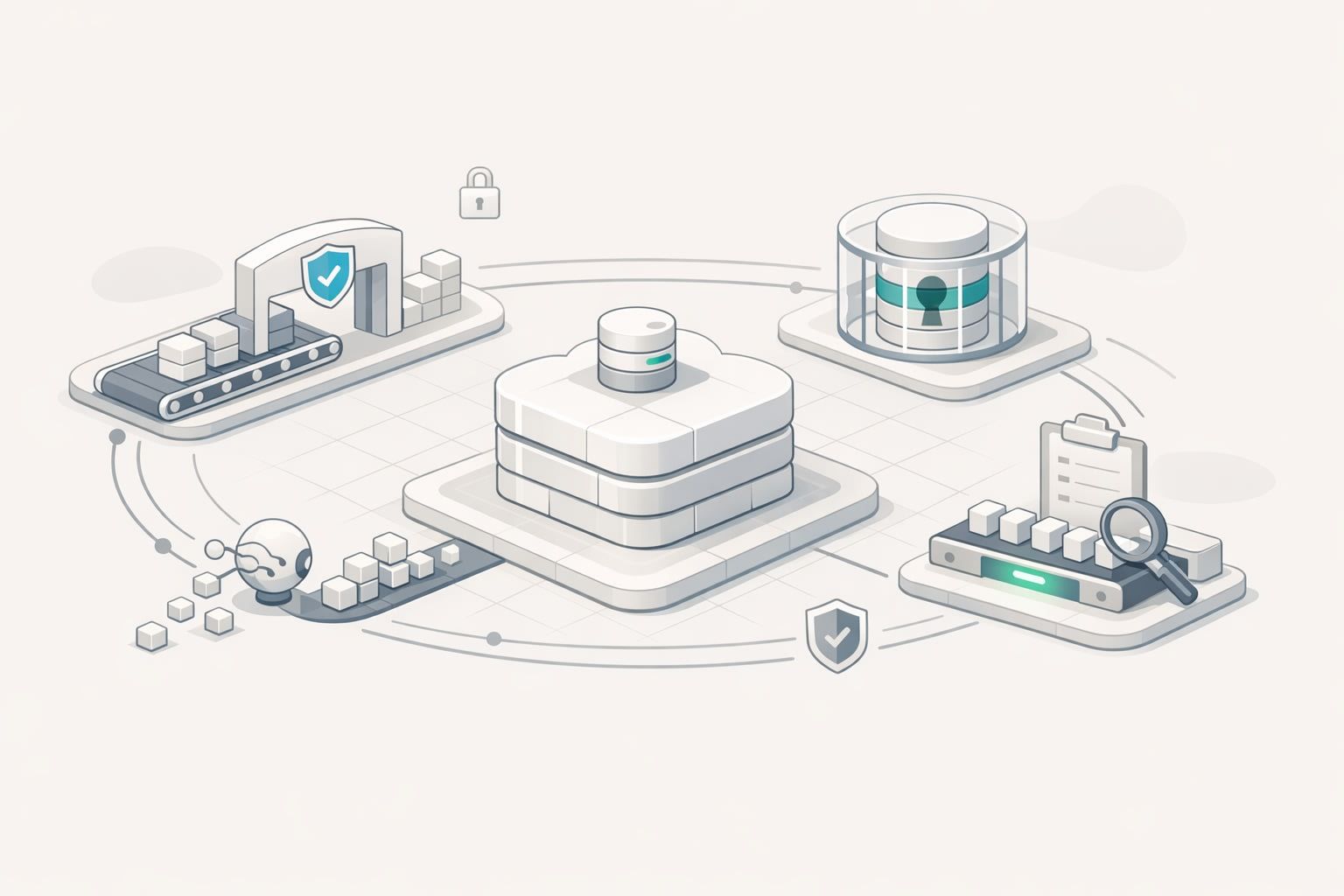
AI builders can ship working prototypes fast, but speed changes the failure modes: schema tweaks happen frequently, security assumptions get copied from prior projects, and “it works on my machine” becomes “it broke in production.” If your stack is React + Supabase (Postgres, Auth, Storage, Realtime), the best guardrails are practical ones: a disciplined migration workflow, explicit Row Level Security (RLS) policies, and regression tests that catch accidental breakage.
This is especially relevant when your app is generated or iterated via tools like lovable.dev, where you may move rapidly between UI changes and backend changes. The goal isn’t to slow down—it’s to make backend changes predictable and reversible.
A step-by-step process you can reuse
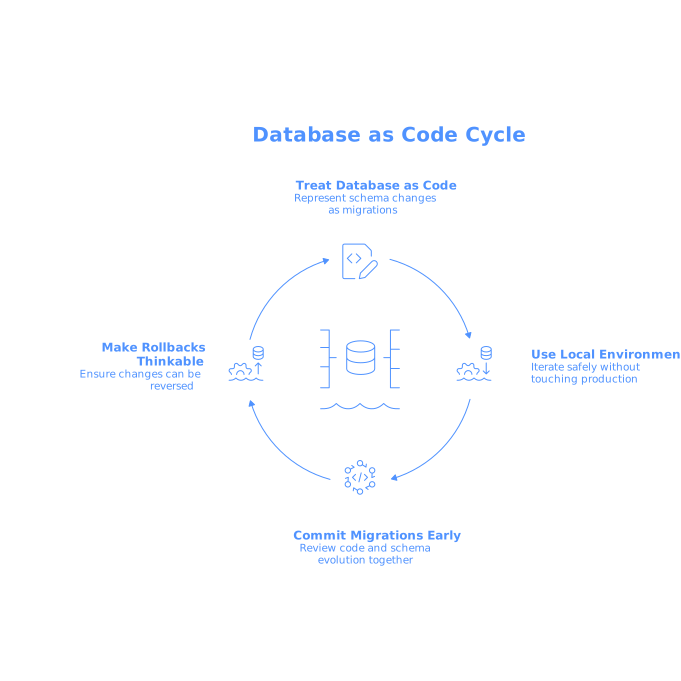
Step 1: Treat the database as code, not as a UI state
Start with a simple rule: every schema change must be represented as a migration in version control. Avoid “quick fixes” in the Supabase dashboard that never get codified. When an AI-generated app proposes a new table or changes a column, you want a durable artifact that explains what changed, when, and why.
- Use a local Supabase environment (CLI) so you can iterate safely without touching production.
- Commit migrations early in the same PR as application changes, so reviewers can see how code and schema evolve together.
- Make rollbacks thinkable: even if you don’t implement perfect down-migrations, write changes so they can be reversed with a follow-up migration.
Step 2: Choose “expand/contract” for anything user-facing
The most common way AI-assisted iteration breaks apps is by shipping a destructive schema change (rename, drop, type change) while older code paths still exist. Expand/contract prevents this.
- Expand: add new columns/tables without removing the old ones (e.g., add
display_namewhile keepingname). - Backfill: run a migration to populate new fields from old data.
- Dual-read or dual-write briefly if needed during a transition.
- Contract: remove old fields only after the app no longer depends on them.
This pattern turns risky edits into a sequence of small, reviewable steps. It also makes AI-generated changes easier to validate: you can ask the system to propose the next migration in the sequence rather than “just rename the column.”
Step 3: Put a safety harness around migrations
Before migrations hit production, enforce a few checks that stop the most expensive accidents:
- Lint the SQL (formatting and obvious anti-patterns) and require migrations to be idempotent where feasible.
- Block destructive operations by default in CI unless explicitly approved (drops, truncates, type changes on large tables).
- Detect locks: adding a
NOT NULLconstraint or changing column types can lock tables; schedule those changes carefully and prefer incremental approaches.
In practice, this is a combination of conventions and CI rules. If you’ve ever had “silent” operational work pile up, this kind of guardrail prevents backend issues from slipping into the background until a user reports them. (Related: the patterns behind the silent queue problem are very similar—bugs don’t disappear just because they’re not in your sprint.)
RLS policies that don’t drift as the schema evolves
Step 4: Enable RLS early and default to deny
Supabase makes it easy to expose Postgres over APIs. That power is why RLS matters. Enable RLS on tables that store user data, and start from “deny by default.” Then add explicit policies for read/write paths.
A practical baseline for multi-tenant apps is:
- Every row has an
owner_id(ororg_id) that matches the authenticated user or their organization membership. - Policies are written for select, insert, update, and delete separately (don’t rely on one policy to “cover everything”).
- Service-role operations are isolated to server-side code, never the client.
Step 5: Centralize authorization logic with helper functions
As AI-generated apps grow, RLS policy sprawl becomes a real maintenance issue. One schema change can require touching a dozen policies. To reduce drift, centralize authorization checks into Postgres functions and reuse them across policies.
Examples:
is_org_member(org_id uuid)has_role(org_id uuid, role text)can_edit_project(project_id uuid)
These functions become your “security API.” You can test them, review them, and keep policies readable. It’s also easier to ask an AI tool to update a single function when the membership model changes than to rewrite many policies correctly.
Step 6: Add policy regression tests, not just app tests
Many teams test UI flows and API responses but never test RLS directly. The result: a migration changes a column name, a policy silently becomes too permissive (or too restrictive), and you discover it from a support ticket.
Create a small suite that asserts security invariants, such as:
- A user cannot read another user’s rows.
- A user can insert rows only for themselves (or their org).
- Role-based permissions behave as expected (viewer vs editor vs admin).
These tests should run against a disposable database created from migrations, so the exact schema + policies are always what you’re shipping.
Regression testing that keeps pace with AI-driven iteration
Step 7: Build a “golden path” test suite for the core workflows
When your app changes daily, you need a stable set of core workflows that must never break. Pick 5–10 golden paths: signup/login, creating the primary resource, inviting a teammate, viewing a dashboard, exporting data, etc.
Then test them at two levels:
- Database-level: RLS/policy tests + key queries (fast, precise).
- API/UI-level: end-to-end tests for the handful of flows that represent “the product still works.”
Step 8: Use realistic seed data and keep it under version control
Regression tests are only as good as the data they run on. Seed datasets should cover multi-tenant scenarios, different roles, and edge cases (empty states, large lists, archived items). Keep the seed logic versioned alongside migrations so you can reproduce failures locally.
This is also where feedback systems help. If your support, sales, and forums all report “permissions are weird,” you want to connect those threads to a missing test or a policy gap. (The discipline described in feedback debt and spotting duplicate requests maps nicely to backend guardrails: both are about turning repeated pain into a reusable check.)
Step 9: Wire it into CI so nothing ships “by accident”
The final guardrail is automation: run migrations on a clean database in CI, apply seeds, run policy tests, run golden-path tests, and only then deploy. If an AI-generated change proposes a new table, CI should fail if RLS isn’t enabled (when appropriate) or if policies aren’t present.
This closes the loop: schema changes, security rules, and regressions are all validated together. You can still iterate quickly—you’re just doing it with a system that makes unsafe changes loud, not silent.
A practical way to use AI without giving up control
AI can draft migrations, suggest policy templates, and generate test scaffolding, but the guardrails are what make the output trustworthy. Keep the database lifecycle explicit, treat RLS as a first-class feature, and invest in a small, high-signal regression suite. With a GitHub-synced workflow and a standard stack, tools like lovable.dev can help teams move fast while still keeping Supabase production changes auditable and safe.