Close the Feedback Attribution Gap With Request Tracking That Proves Impact
Jamie

Why the feedback attribution gap keeps showing up
Most product teams are good at collecting feedback and decent at prioritizing it. The breakdown happens in the middle: customers can’t see a credible line from “I asked for this” to “you decided” to “it shipped and here’s what changed.” That invisible middle creates what you could call a feedback attribution gap—users assume their input disappeared into a black box, even when it actively shaped the roadmap.
Closing this gap isn’t a matter of writing better release notes. It’s a tracking problem. Specifically: can you preserve a durable, queryable chain of evidence from request → decision → outcome, and can you surface that chain back to the customer in a way that feels personal and verifiable?
Define the chain of record: request → decision → outcome
A usable system needs three artifacts that stay linked over time. If any one is missing, attribution collapses into vague “we’re listening” messaging.
1) Request
This is the customer’s intent, ideally captured in their words and connected to who they are (segment, plan, revenue, role). Requests can arrive via a public portal, support tickets, sales calls, community posts, or interviews. The important part is not where it comes from—it’s that you normalize it into a single object with:
- Canonical title (what you’ll call it internally)
- Original phrasing (what the customer actually asked)
- Source + timestamp (ticket ID, call link, thread URL)
- Customer identity and segment (account, ARR tier, persona)
- Use-case tags (why they want it, not just what it is)
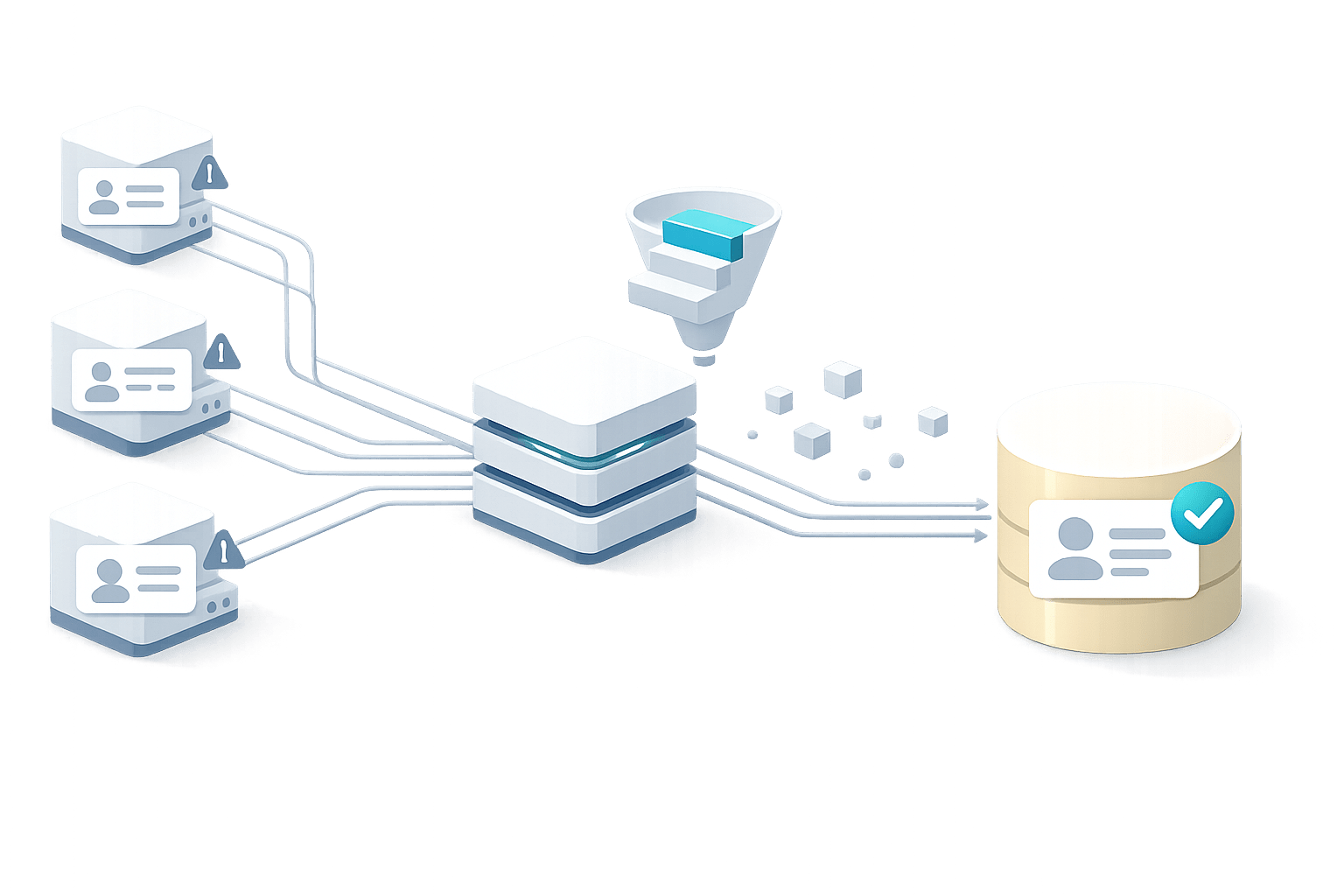
If you struggle with “five tickets, three emails, two forum posts that are really the same request,” the chain breaks immediately because you’ll never know which customers to close the loop with. That’s where managing duplicates becomes foundational; otherwise you end up replying to a fraction of the impacted users. If this is a recurring issue, the pattern is usually what many teams call feedback debt—unmerged, unclassified, and untraceable requests piling up over time.
2) Decision
A decision is the moment you commit to a direction—even if that direction is “not now.” Customers don’t need every internal detail, but they do need proof that a choice was made and why. A decision record should include:
- Status (planned, under consideration, not planned, shipped)
- Decision date (the point the team aligned)
- Rationale (1–3 sentences: constraints, trade-offs, scope)
- Owner (PM or team responsible)
- Planned scope note (what it will and won’t include)
The rationale is the bridge between customer expectations and engineering reality. Without it, “Planned” reads like a placating label. With it, the status feels like an actual product decision.
3) Outcome
Outcome means what changed in the product and how the original request maps to the shipped work. It should be anchored in something verifiable: a release note, a changelog entry, or a shipped version. A strong outcome record includes:
- Ship date (and version if applicable)
- What shipped (the concrete behavior change)
- How to use it (quick steps, limits, rollout details)
- Attribution statement (who it helps, which pain point it addresses)
This is where customers should be able to say, “That’s exactly what I asked for,” or, just as valuable, “I see why you implemented a different approach.”
Make attribution measurable with two simple IDs
To track the chain reliably, add two lightweight identifiers that travel with the work:
- Feedback ID: the canonical request object ID (one per deduplicated request).
- Outcome ID: the shipping event (release note entry, version tag, or rollout milestone).
Every decision links back to a Feedback ID. Every shipped item links to one or more Feedback IDs and exactly one Outcome ID. This structure prevents the classic failure mode where a feature ships, but nobody can confidently answer, “Which customers asked for this, and when did we tell them?”
Operationalize the workflow without adding meetings
The best attribution systems are boring. They don’t require a weekly “feedback sync” to stay accurate; they fit inside existing habits.
Capture and deduplicate at the edges
Start where feedback enters. If support and sales are each logging requests differently, you’ll get fragmentation, not signal. Centralizing capture into a feedback platform like canny.io helps because requests can be consolidated into a single workspace while preserving the original sources, and AI-assisted deduplication can reduce the manual work of merging similar threads.
Regardless of tooling, the rule is: don’t let the same request become five separate objects. Deduplicate early, while the context is fresh, not months later when you’re trying to do end-of-quarter reporting. If you need a practical way to spot and merge repeat asks across channels, this internal guide on feedback debt and duplicate requests maps well to the underlying problem.
Decide in the same place you prioritize
If prioritization happens in one tool but the decision lives in meeting notes, you’ll lose the rationale. Keep the decision attached to the request object. That can be as small as a status update plus a short explanation. The key is that a customer-facing update can later be derived from it without rewriting history.
Link shipped work back to requests as part of release hygiene
When something ships, attribution should be a checkbox, not a scavenger hunt. During release note drafting, include “linked Feedback IDs” as a required field. This is also where teams benefit from avoiding the “silent queue” problem: bugs and issues that accumulate without clear ownership often steal roadmap capacity, and then planned feedback-driven work slips with no message to affected customers. If that’s happening, the issue isn’t communication—it’s that decisions and outcomes aren’t being tracked consistently enough to support honest updates.
Show customers proof their input changed the product
Attribution only matters if customers can see it. The goal is not to broadcast everything; it’s to send the right proof to the right people at the right time.
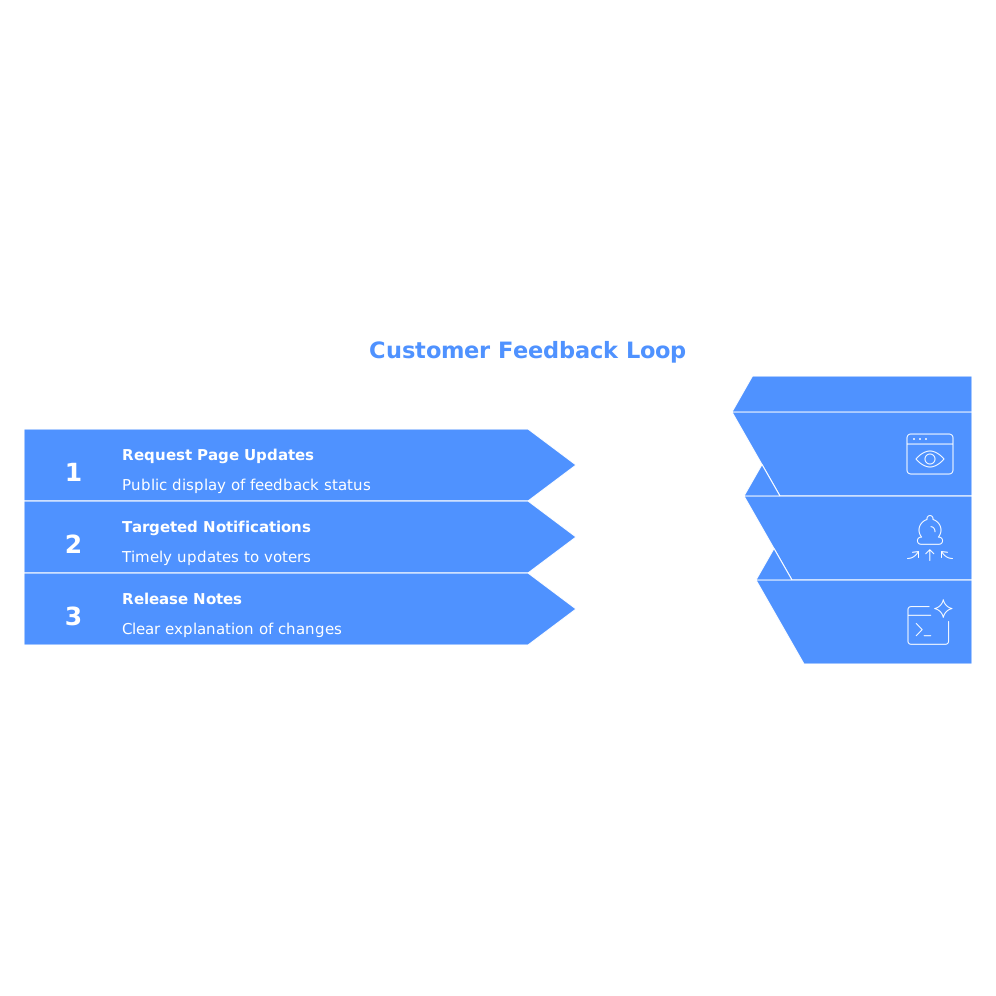
Use three customer-facing touchpoints
- Request page updates: a public (or authenticated) place where the status, rationale, and outcome live together.
- Targeted notifications: notify voters/watchers when a decision is made and when the outcome ships.
- Release notes with mapping: each update should clearly state what changed and point back to the problem it solves.
The crucial detail is the mapping language. Instead of “Improved permissions,” write the outcome in terms of the original pain: “You can now restrict X to role Y, so teams can Z.” That’s what makes the proof feel real.
Segment the loop-closure so it feels personal
Customers trust attribution when it reflects their context. If an enterprise admin requested audit logs, they don’t want the same message as a startup founder who voted for “better notifications.” Track segment and use case on the request, then tailor the update:
- What shipped (common)
- Why it matters to your workflow (segment-specific)
- Anything still missing (scope clarity)
Common failure modes and how to prevent them
“Shipped” without a clear outcome
If you mark a request shipped but the customer can’t find the change, attribution turns into distrust. Always include “how to use it” and rollout notes (gradual release, plan limitations, admin enablement).
Decisions made in private, surfaced as sudden status flips
Status changes without rationale feel arbitrary. Even a short explanation (“We’re doing X first because Y is a prerequisite”) dramatically improves perceived transparency.
Over-collecting feedback with no plan to maintain it
High-volume intake without deduplication and ownership creates backlog theater. Make one team accountable for the hygiene: merging duplicates, tagging use cases, and keeping decision records current.
What to track so you can prove the system works
Once the chain exists, you can measure whether customers are actually seeing the impact:
- Attribution rate: % of shipped items linked to at least one Feedback ID.
- Loop-closure coverage: % of voters/watchers notified on decision and ship events.
- Time to decision: median days from request creation to decision recorded.
- Time to outcome: median days from decision to ship for planned items.
- Repeat requests: how often the same ask reappears after you “shipped” (signals mismatch).
If these metrics improve, the feedback attribution gap shrinks in a way customers can feel: fewer “any update?” pings, more meaningful engagement on the roadmap, and more confidence that participating is worth their time.