A Feature Request Firewall That Sets Clear Escalation SLAs Without Losing Trust
Jamie
Why a feature request firewall beats “we’ll pass it to the team”
Feature requests rarely arrive as neat, comparable inputs. They show up as support tickets, sales call notes, forum threads, and “quick asks” in Slack. Some are genuinely strategic. Many are duplicates. Others are workaroundable, out of scope, or coming from a segment you can’t sustainably serve right now.
The problem isn’t saying “no.” It’s saying “maybe” too often, too slowly, and without a consistent standard. That’s how teams accumulate invisible obligations, erode trust, and let one loud request reshape the roadmap.
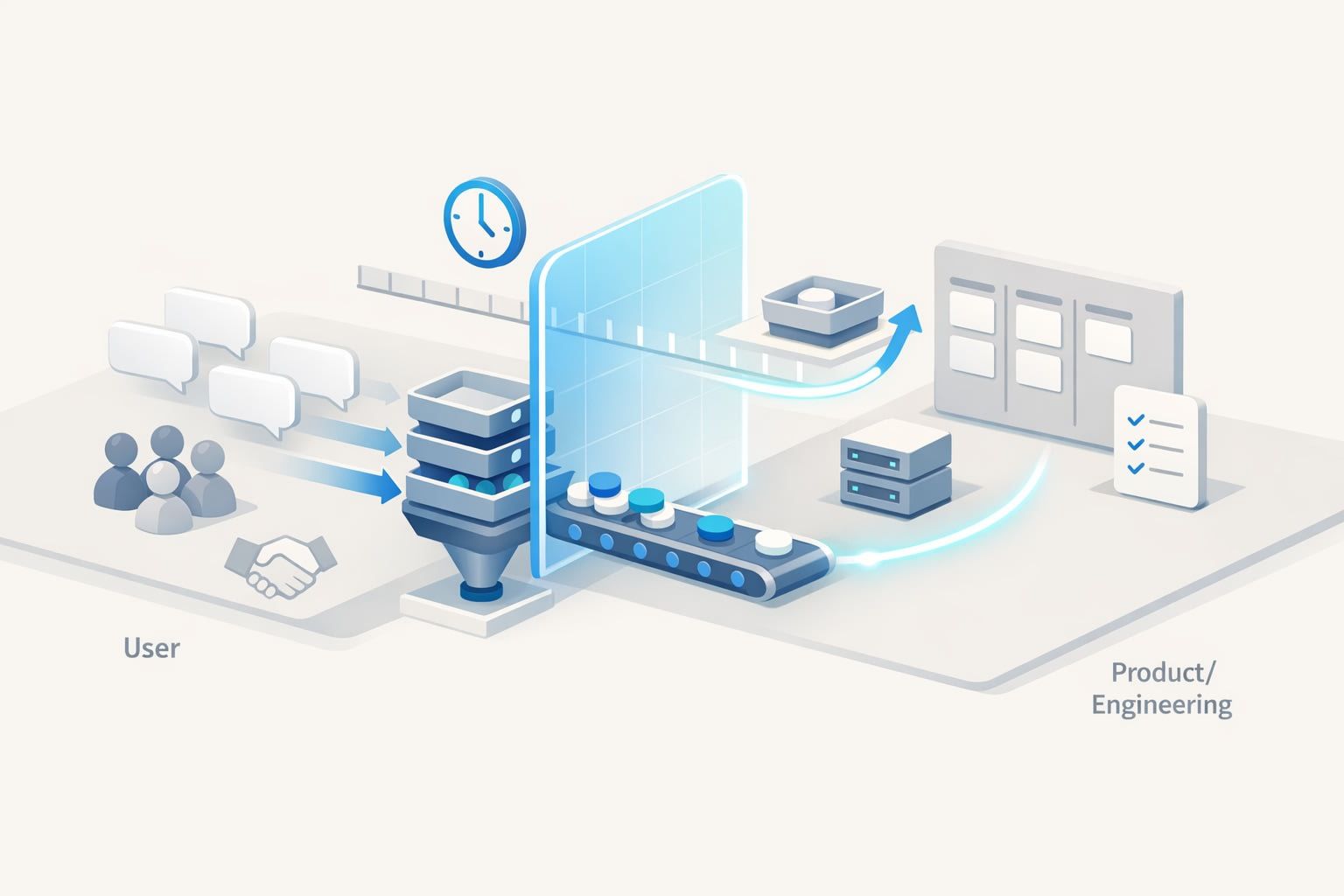
A “Feature Request Firewall” solves this by separating intake from escalation. It’s a segment-based service-level agreement (SLA) that defines when feedback should be escalated to product, when it should be acknowledged and deflected, and how to do both without sounding dismissive.
Define the firewall as a decision system, not a team habit
The firewall is not a single rule like “only escalate enterprise requests.” It’s a small decision system with two outputs:
- Escalate: route the request into the product discovery/prioritization stream with a clear follow-up contract.
- Deflect with trust: respond quickly, capture context, and close the loop honestly—without implying it’s on the roadmap.
To make that work, you need explicit thresholds tied to customer segments and business impact, not individual opinions.
Start with segments that reflect reality
Most teams already have segments, but they’re either too broad (“SMB vs enterprise”) or disconnected from product decisions (“Free vs paid”). Your firewall works best when segments map to both value and constraints. A practical baseline:
- Strategic accounts: high revenue, high retention risk, or reference value.
- Core growth: mid-market customers with repeatable use cases.
- Long-tail: low ACV, high variability, often edge cases.
- Prospects: requests from sales cycles, often speculative.
You can refine this further with product-fit signals (feature adoption, activation stage) and operational signals (support load, implementation effort). The key is that segment membership changes the escalation SLA.
Set segment-based escalation SLAs you can actually keep
“SLA” here means internal commitment to a response and handling standard, not a public promise to ship anything. The firewall should define two clocks:
- Customer response time: how fast you acknowledge and clarify.
- Product triage time: how fast you decide whether to actively evaluate vs park.
Example SLA matrix
- Strategic accounts: respond in 1 business day; product triage within 5 business days.
- Core growth: respond in 2 business days; triage within 10 business days.
- Long-tail: respond in 2–3 business days; triage only when demand crosses a threshold.
- Prospects: respond in 1–2 business days; triage only if it matches active strategic themes.
The moment you publish or repeat a promise like “I’ll get this to the product team,” you have created an implied SLA. The firewall prevents accidental commitments by making escalation explicit and rare.
Use three gates before anything reaches product
Most escalation failures come from skipping basic checks. Build these three gates into the firewall and make them routine for support and sales.
Gate 1: Is it already solved, documented, or workaroundable?
If the request is really a discoverability issue, escalation wastes time and creates false hope. Provide the best path: documentation, a settings path, a template, an integration, or a workaround. Capture the friction (“hard to find,” “too many steps”) as feedback, but don’t escalate as a net-new feature.
Gate 2: Is it a duplicate with existing demand?
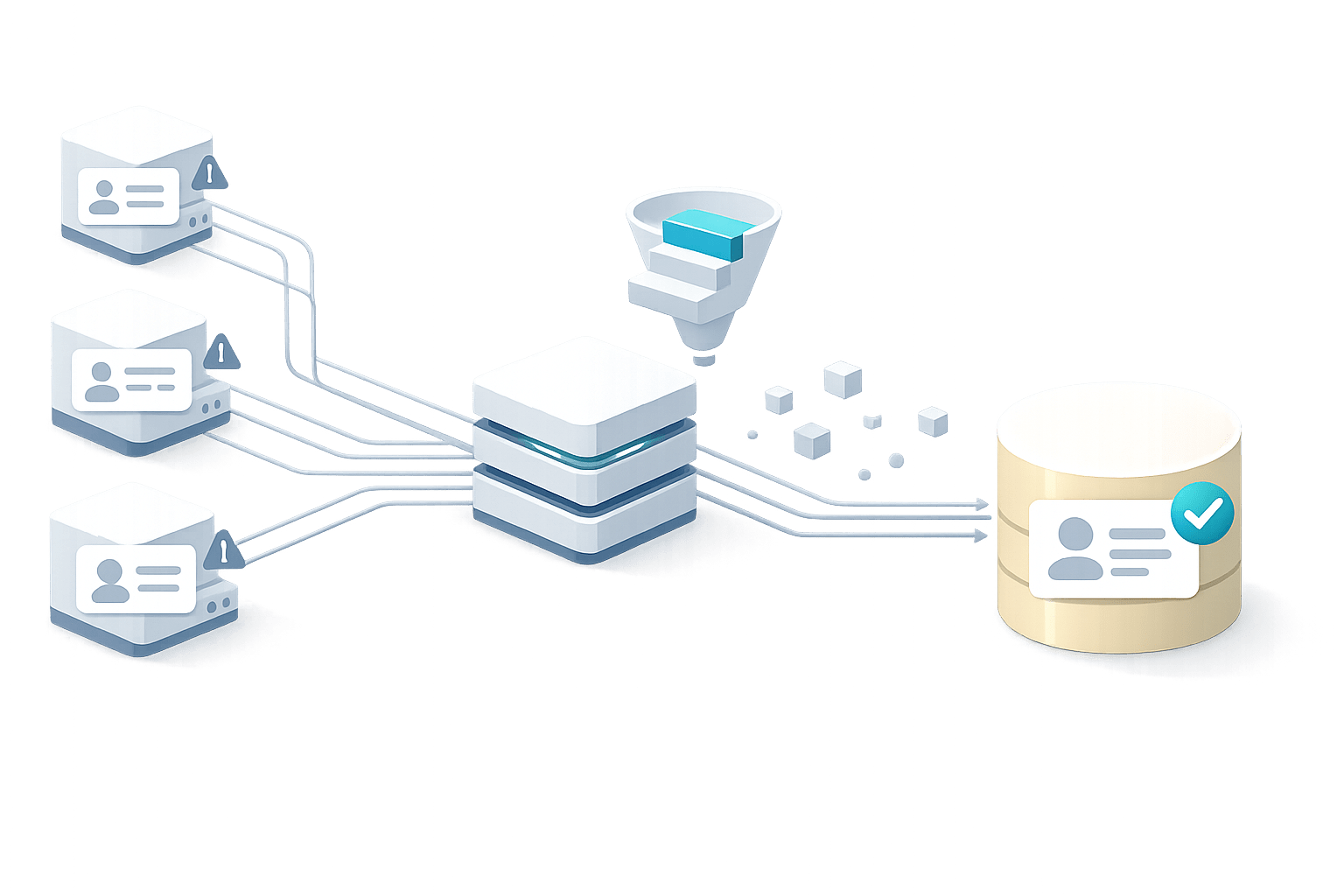
Duplicate requests are where teams quietly lose weeks. Consolidate first, then evaluate. If you don’t have strong deduping habits across tools, you’ll overestimate novelty and underestimate volume. This is where a platform approach helps: Canny’s Autopilot is designed to automate capture and deduplication from support and conversation tools so triage starts with a cleaner dataset, not scattered anecdotes. You can centralize feedback and decisions in canny.io while still letting teams work in their native systems.
If you want a deeper process for this, the idea of “feedback debt” is a helpful frame—especially when requests are split across support, sales, and forums. You can reference how to spot duplicate requests across channels to formalize a shared approach.
Gate 3: Does it clear an impact threshold for this segment?
This is the heart of the firewall: segment-based thresholds. Examples:
- Strategic accounts: escalate if it affects renewal risk, compliance, or an executive sponsor’s success metric.
- Core growth: escalate if it appears across multiple accounts in the segment and aligns with a current product bet.
- Long-tail: escalate only if volume is high and effort is low-to-moderate, or if it unlocks a broader market.
- Prospects: escalate only if it repeatedly blocks deals in your target ICP, not one-off edge cases.
Notice what’s missing: “the customer is upset.” Emotion is real and important, but it’s not a prioritization model. The firewall lets you respond with empathy while keeping escalation criteria stable.
Deflect without losing trust using clear language patterns
Deflection fails when it sounds like a brush-off. The goal is to be quick, specific, and honest about uncertainty. A reliable pattern is:
- Acknowledge the use case in the customer’s words.
- Clarify one detail that improves the quality of the captured feedback.
- Set expectation about evaluation without implying commitment.
- Offer a next-best option (workaround, integration, alternative workflow).
For example: “I understand you need X to do Y reliably. A quick question—how often does this happen and for which roles? I can’t promise a timeline, but I’ll log this with context so it’s evaluated alongside similar requests. In the meantime, here’s a workaround that unblocks most teams…”
This preserves trust because it trades vague optimism for concrete help and a clear boundary.
Escalate with a contract that protects product time
When a request passes the firewall, escalate it with a tight “contract” so product doesn’t have to re-investigate basics:
- Segment + account context: who is asking and why they matter.
- Problem statement: what breaks today, not the proposed solution.
- Evidence: number of similar requests, revenue at risk, frequency, screenshots or logs if relevant.
- Success criteria: what “fixed” would mean operationally for the customer.
This is also how you avoid the “silent queue” effect where bugs and requests pile up without clear ownership or visibility. If your backlog regularly surprises you, it’s worth pairing the firewall with a separate process for bug intake and prioritization—see how to keep customer bugs from derailing your roadmap.
Operationalize the firewall with simple metrics
A firewall only works if it changes behavior. Track a small set of measures weekly:
- Escalation rate by segment (too high suggests weak gates).
- Time to first response for feature requests.
- Duplicate ratio (a leading indicator of feedback debt).
- Closed-loop rate (how often you follow up when a decision is made).
The outcome you want is not “more escalations.” It’s fewer, better escalations—and faster, more trustworthy deflections that customers experience as helpful, not dismissive.