The UTM tax and the fix for inconsistent campaign naming
Jamie
The hidden cost of inconsistent campaign naming
Most teams treat UTM parameters and campaign names as “just tracking.” In practice, they’re a tax you keep paying: every inconsistent name, missing parameter, or creative variation becomes manual cleanup before reporting makes sense.
This is what the “UTM tax” looks like in real life:
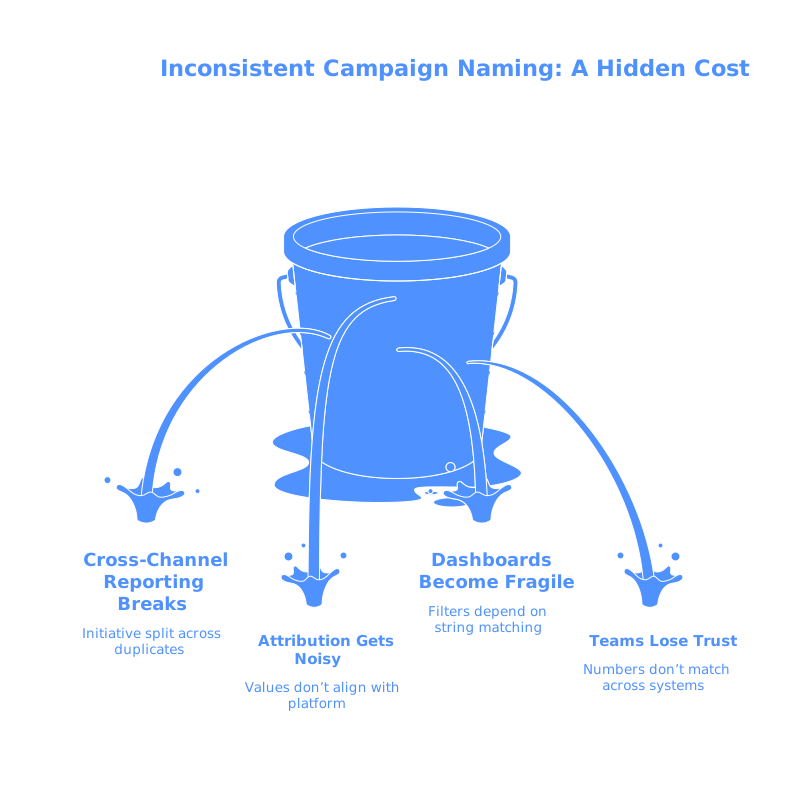
- Cross-channel reporting breaks because the same initiative is split across dozens of near-duplicates.
- Attribution gets noisy when channel, campaign, or content values don’t align with platform naming.
- Dashboards become fragile as filters and calculated fields depend on string matching.
- Teams lose trust in numbers when “Brand Search” in Google Ads doesn’t match “brand_search” in UTMs and “BRAND-SEARCH” in the CRM.
The root cause is rarely one mistake. It’s that naming is a distributed system: marketers, agencies, lifecycle tools, ad platforms, and analytics each generate names with different constraints and habits.
Why UTMs and platform naming drift over time
Even if you start with a naming convention doc, drift is almost inevitable. Common forces include:
- Different character limits and allowed symbols across Google Ads, Meta, LinkedIn, email tools, and CRMs.
- Human shortcuts under deadline pressure (“springpromo”, “spring_promo”, “Spring Promo”).
- Agency and vendor defaults that don’t match your internal taxonomy.
- Channel-specific structure (ad set vs. campaign vs. placement) that doesn’t map neatly to UTMs.
- Rebrands and org changes that alter product lines, regions, or business units mid-quarter.
The result: your reporting layer has to reconcile language, not just metrics. And language is messy.
How inconsistent naming breaks cross-channel reporting
1) You can’t reliably group performance
Cross-channel analysis depends on grouping: by initiative, region, funnel stage, product, or audience. If “utm_campaign” holds 15 variations of the same campaign, you either undercount (by filtering too narrowly) or overcount (by merging unrelated strings).
2) Definitions become channel-specific
Teams end up with channel-specific dashboards because a single “Campaign” dimension doesn’t mean the same thing everywhere. This blocks the most valuable questions—like budget allocation across channels—because comparisons aren’t apples-to-apples.
3) The cleanup work never ends
Many organizations solve naming problems with recurring spreadsheet mapping: a tab of “bad values” and “correct values.” It works until the next new campaign launches, a new agency joins, or a tool changes how it encodes URLs. Over time, this resembles a form of operational debt: recurring work that grows as your system grows.
What “automated naming harmonization” actually means
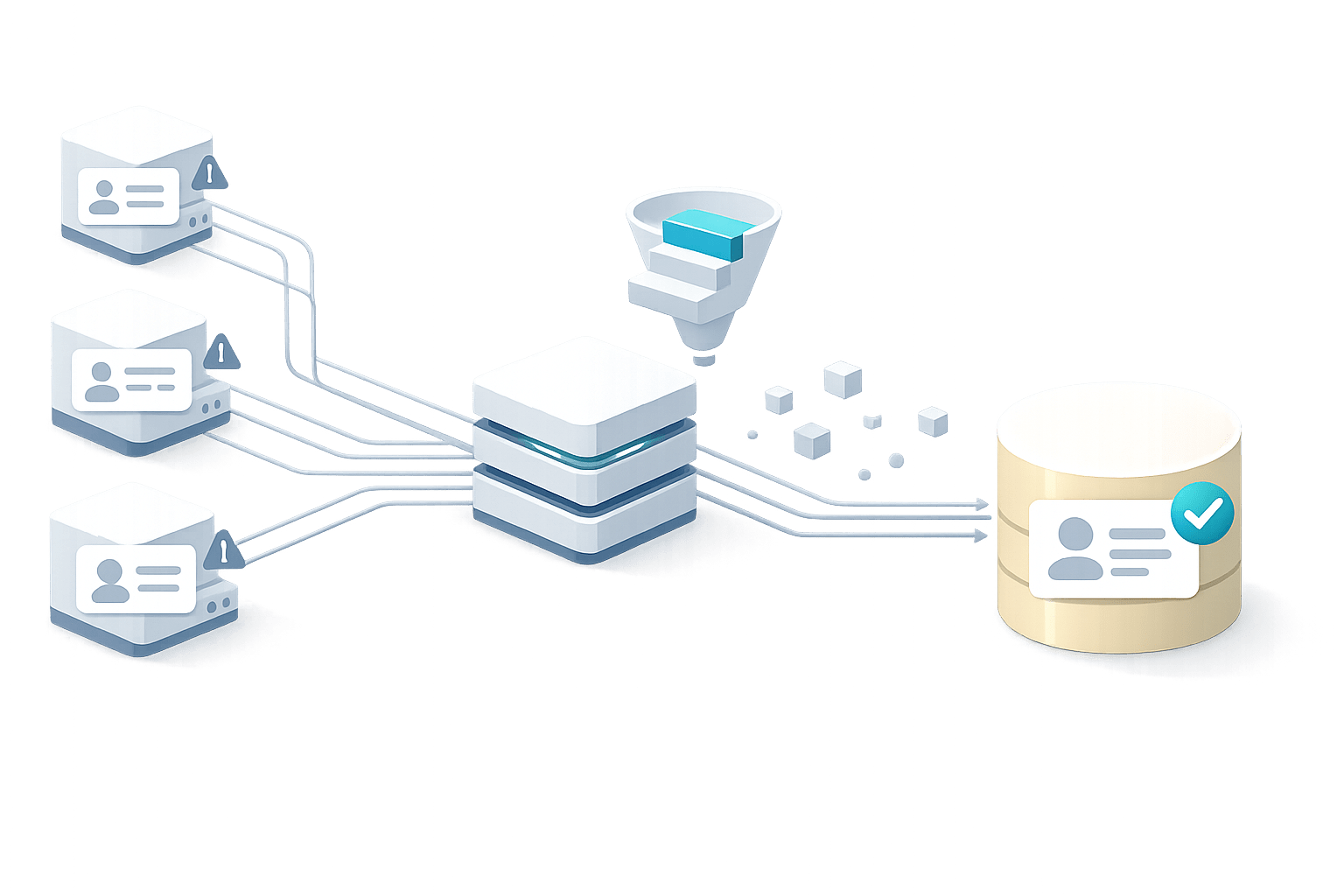
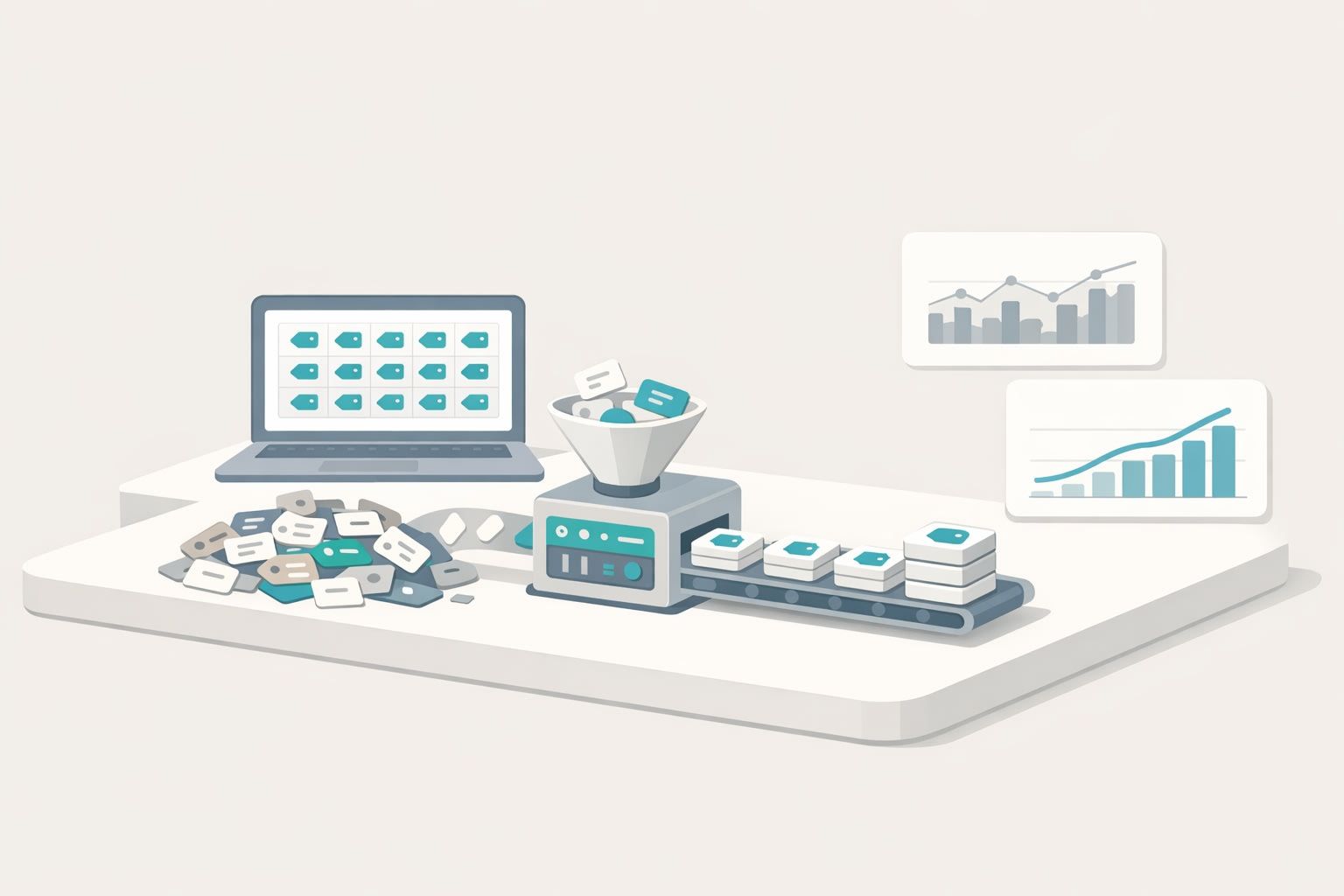
Automated naming harmonization is the practice of transforming messy campaign identifiers into a consistent taxonomy as data flows, not after it lands in a dashboard. The point isn’t perfection; it’s repeatability and governance.
In practice, harmonization usually includes:
- Standardization (case, separators, trimming whitespace, removing accidental prefixes/suffixes).
- Normalization (mapping synonyms and variants to a canonical value).
- Enrichment (deriving structured fields like region, product, funnel stage from naming patterns).
- Validation (flagging values that don’t match the convention so teams can fix upstream).
This is where marketing data infrastructure earns its keep: you reduce one-off fixes in BI and move toward a governed source of truth.
A practical approach to fixing the UTM tax
Step 1: Define a canonical taxonomy you can stick to
A workable taxonomy is specific enough to be useful and simple enough to be adopted. Most teams benefit from standard fields like:
- Channel (paid_search, paid_social, lifecycle, affiliate)
- Initiative (product_launch, webinar_series, promo)
- Product or line (core, pro, enterprise)
- Region (na, emea, apac)
- Funnel stage (awareness, consideration, conversion)
If you already have reporting dimensions in your warehouse or BI tool, align naming to those—don’t invent a parallel system.
Step 2: Build a mapping layer for historical cleanup
You’ll likely need to reconcile old values. The key is to do it once, centrally, rather than replicating the same “CASE WHEN” logic across dashboards.
Start with a frequency table of campaign values across sources, then map the top offenders first (the ones driving most spend or sessions). This is also a good moment to identify duplicate requests across teams—different stakeholders asking for “new reports” that are really the same report blocked by naming inconsistency. The pattern is similar to what many teams experience as feedback debt from duplicate requests across channels.
Step 3: Automate harmonization in the pipeline, not in dashboards
The most durable fix is to harmonize naming as part of data collection and transformation. That way:
- Every downstream destination (warehouse, spreadsheet, dashboard) receives consistent fields.
- Logic is versioned and auditable.
- You can enforce the same definitions across paid media, analytics, and CRM data.
With a platform like Funnel.io, teams can collect performance data from advertising, analytics, and CRM tools and apply transformations that standardize naming and definitions before the data hits analysis. The practical effect is fewer bespoke dashboard fixes and more consistent cross-channel comparisons.
Step 4: Add monitoring so drift is caught early
Harmonization is not “set and forget.” Add lightweight checks such as:
- New value alerts when unseen utm_campaign or campaign_name values appear.
- Coverage metrics showing what percentage of spend/sessions maps cleanly to your taxonomy.
- Exception buckets (e.g., “unmapped_campaign”) that are visible in dashboards so issues can’t hide.
Operationally, this behaves like any multi-system automation: the more tenants, sources, and credentials involved, the more you need observability and governance. If you’re building internal workflows around these transformations, the same design principles apply as in multi-tenant automations with secrets, RBAC, and practical observability.
Common harmonization patterns that work well
Regex-based extraction
If your naming convention embeds structured tokens (like “EMEA” or “ENT”), regex can populate clean fields even when the raw string is noisy.
Lookup tables for exceptions
For the long tail of odd names, lookup tables are faster than endless regex. Treat them as a governed asset: reviewed, owned, and updated intentionally.
Canonical IDs for initiatives
When possible, assign a stable “initiative_id” (or campaign group ID) and map all channel-specific names to it. This prevents re-runs, rebrands, and naming tweaks from splitting reporting.
What changes when naming becomes consistent
Once you reduce the UTM tax, reporting shifts from string-wrangling to decision-making:
- Budget discussions happen at the initiative level, not the channel-dashboard level.
- Attribution models have cleaner inputs and fewer “unknown” buckets.
- Teams ship campaigns faster because governance is built into the pipeline.
- Executives trust cross-channel rollups because definitions are consistent.
The goal isn’t a perfect naming world. It’s a system where inconsistency is expected, detected, and automatically corrected into a reliable source of truth.